
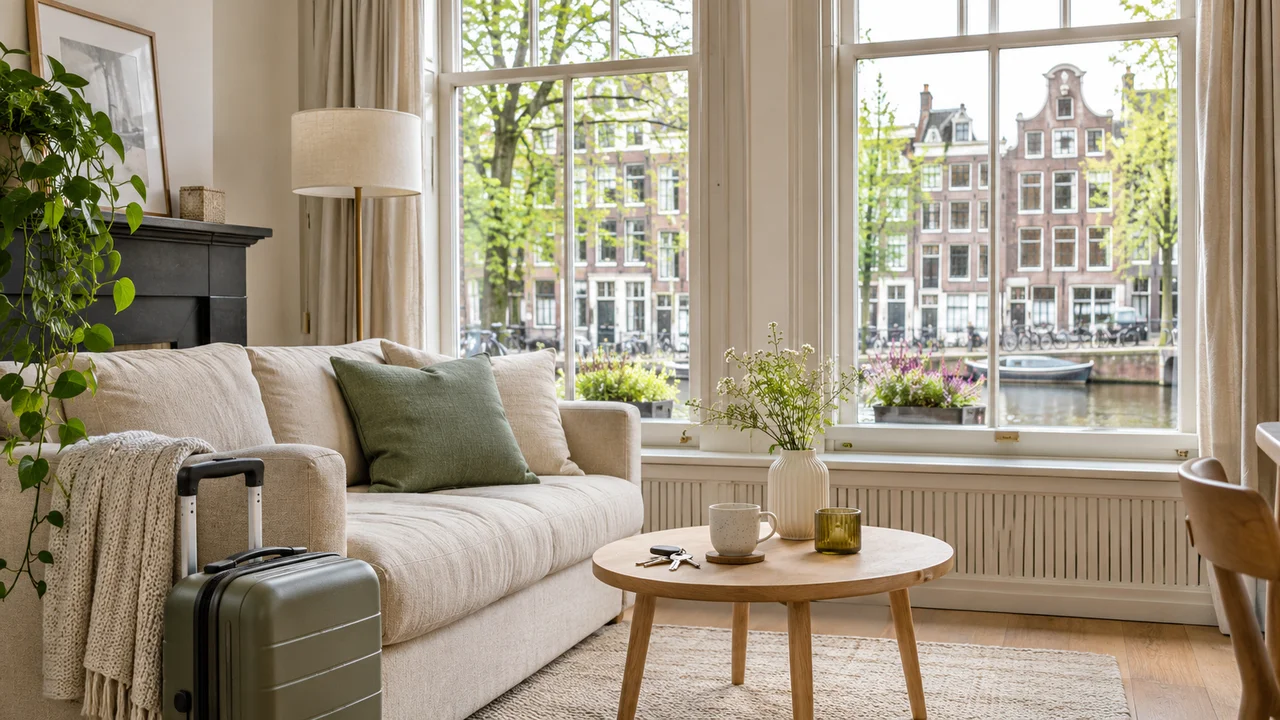
A good temporary place gives you calm while you search. The wrong one can leave you without a BSN, without a bank account and paying for a hotel far longer than planned. This guide explains your options, how long to book, what it costs and the registration issue that catches so many newcomers out.
Why you’ll probably need temporary housing
In a competitive market, it’s hard to sign a lease before you arrive, and most homes become available a few weeks after they’re listed. Temporary housing gives you a base to explore neighborhoods, attend viewings in person and start your new job without pressure. With good preparation, it’s a short bridge, not a long stay.
Your temporary housing options
Serviced apartments
Fully furnished apartments with services like cleaning, Wi-Fi and utilities included. Comfortable and flexible, and often used by companies for new employees. Usually the most expensive option, but everything is ready on day one.
Short-stay apartments
Furnished apartments rented for a few weeks to a few months, usually through a short-stay agency. Fewer services than serviced apartments, often better value for longer stays.
Aparthotels and hotels
Fine for your first week or two, especially if you arrive at short notice. For longer stays, an aparthotel with a small kitchen is more practical and often cheaper per night.
Holiday rentals
Platforms like Airbnb can work for a short visit, but many cities, Amsterdam especially, strictly limit holiday rentals. Longer stays are often not allowed, and you usually can’t register at these addresses.
Subletting a room or apartment
Sometimes offered in expat groups. Be careful: subletting without the landlord’s permission is often not allowed, and this is where rental scams are most common.
The registration issue: can you get your BSN?
This is the part most people don’t hear about until it’s too late.
If you’re staying in the Netherlands for more than four months, you need to register with your municipality, usually within five days of arrival. Registering gives you your BSN (citizen service number), which you need to receive your salary correctly, open a bank account, take out health insurance and much more.
But you can only register at an address that allows it, and many short-stay and holiday rentals don’t.
What to do
- Ask before you book: “Can I register with the municipality at this address?” Get the answer in writing.
- Choose a registration-friendly short stay if you can. Some serviced and short-stay apartments allow it.
- If registration isn’t possible, you can register as a non-resident (RNI) at one of the designated municipalities to get a BSN, but you’ll still need to register your Dutch address once you move into your home.
- Highly skilled migrants and their families can often arrange registration quickly through their city’s expat center, sometimes on their first day.
We always check registration before recommending a temporary stay to our clients. It’s one of the most common, and most avoidable, problems newcomers run into.
How long should you book?
For most people, one to three months is enough, depending on your city, budget and how well your documents are prepared. Our advice:
- Book for at least one month, and check that you can extend
- Look for flexible cancellation, in case you find a home sooner
- Plan your search so your temporary stay overlaps with your future move-in date by a few days
- In tight markets like Amsterdam or Utrecht, or if you’re moving with a family, plan a little longer
The better prepared your rental file is, the shorter your temporary stay usually needs to be.
Renting in the Netherlands as an expat: documents and timing →
What does temporary housing cost?
Temporary housing costs more per month than a long-term rental, because furniture, utilities and often cleaning are included and stays are flexible. Prices depend on the city, location, size and season, and summer and September (the start of the academic year) are usually the busiest. Book early if you’re arriving then.
Tip: Check whether your employer covers temporary housing. Many relocation packages include a few weeks or months of furnished accommodation.
Choosing the right temporary place
- Location: stay near the areas where you want to live, so viewings are easy
- Registration: confirm you can register, or have a plan for your BSN
- Flexibility: can you extend, or leave early?
- What’s included: utilities, Wi-Fi, cleaning, bedding and kitchen equipment
- Space to work: a desk and good Wi-Fi if you’ll work from home
- Pets: many short stays don’t allow them, so ask upfront
- Family needs: enough bedrooms, and a reasonable trip to school if your children start right away
Moving with a dog or cat? Read our guide to moving with pets →
How to avoid temporary housing scams
- Book through known platforms or registered agencies
- Never transfer money before you’ve seen a contract and verified the company
- Be wary of offers far below the market price, or landlords who “are abroad” and want a deposit first
- Check that the address exists and that the agency is registered with the Chamber of Commerce (KvK)
Read more about avoiding rental scams in our housing guide →
From temporary stay to your new home
The goal is to make your temporary stay as short and calm as possible. That means having your documents ready, knowing which neighborhoods suit you, and being able to say yes the moment the right home appears.
How we help
Registration-friendly stays
We recommend short-stay options where you can register, so you get your BSN without delays.
Trusted short-stay partners
We work with reliable short-stay and serviced apartment providers, so you avoid scams.
A search that starts before you land
We prepare your rental file and start searching before you arrive, so your temporary stay is as short as possible.
Viewings from your temporary base
We arrange viewings around your schedule, in person or by video.
Frequently asked questions
Arriving soon?
In a free 15-minute call, we’ll help you find a registration-friendly place to stay and start your home search before you land, so your temporary stay is as short as possible.
Book a free callThis guide is general information. Registration rules and short-stay regulations differ per municipality and can change, so always check with your municipality.