

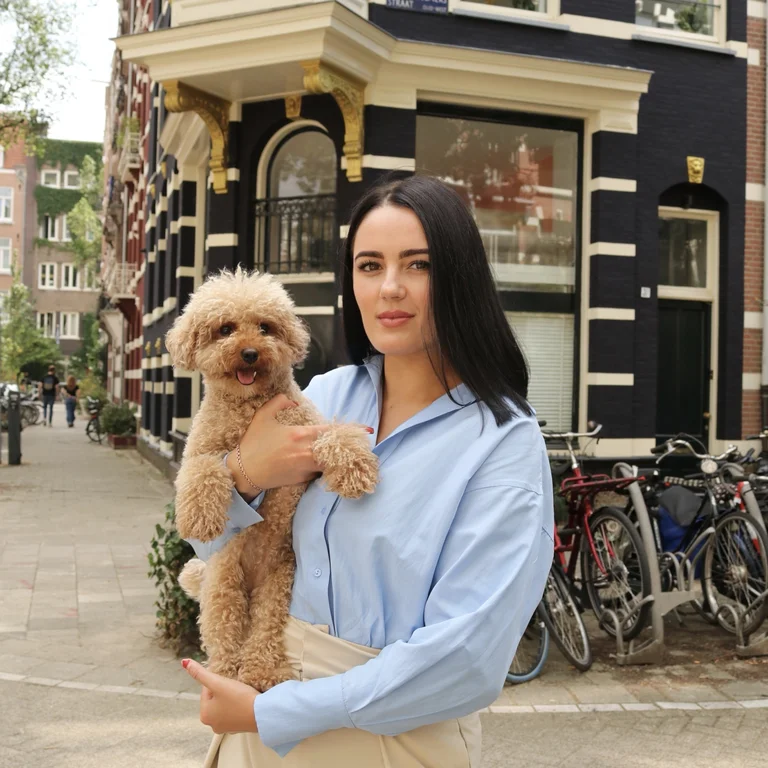
And at We4Expats, we understand that better than most: our office dog Nala is part of the team. The good news is that the Netherlands is a pet-friendly country, with parks, dog-friendly cafés and plenty of green space. The challenge is finding a landlord who says yes. This guide explains how to bring your pets to the Netherlands, where to start your search, and how to make your rental application stand out.

Approved by Nala, our office dog and chief pet officer
Is the Netherlands pet-friendly?
Very. Dogs are welcome in many cafés, shops and on public transport (sometimes with a ticket), and every city has parks and dog-walking areas. Cats are just as popular. Where it gets harder is the rental market: in a competitive market, some landlords prefer tenants without pets, and apartment buildings sometimes have house rules that limit them.
Bringing your pet to the Netherlands: the import rules
Start preparing at least a few months before you move. The basic requirements for dogs and cats are:
- A microchip that meets the international ISO standard
- A valid rabies vaccination, given after the microchip and at least 21 days before travel
- An EU health certificate (from outside the EU) or an EU pet passport (within the EU)
Moving from the US
Your vet completes an EU health certificate, which is then endorsed by the USDA (APHIS). Timing matters: the certificate must be issued shortly before travel, so plan it carefully with your vet. Also check your airline’s pet rules early, as some airlines have restrictions on certain breeds, especially short-nosed dogs and cats.
After you arrive
- Register your dog in the Dutch national dog database within the required period after arrival
- Find a local vet and register your pet there
- Check whether your municipality charges dog tax (hondenbelasting); many do, some don’t
- Consider pet insurance, and check that your liability insurance covers damage caused by your pet
Rules can change. Always check the latest requirements with the Netherlands Food and Consumer Product Safety Authority (NVWA) and your airline before you travel.
Finding a pet-friendly rental: what you’re up against
Landlords worry about three things: damage, noise and cleaning. In apartment buildings, the owners’ association (VvE) may also have house rules about pets. That doesn’t mean you won’t find a home, but it does mean you need to plan your search differently:
- Mention your pets from the very first message, never after the viewing
- Focus on homes where pets can realistically be considered
- Ask about building rules before you fall in love with an apartment
- Expect fewer options, and allow a bit more time
How to make your rental application stand out
A thoughtful application helps a landlord look beyond the number of pets. What works:
A pet CV
A one-page profile for each pet: name, age, breed, size, vaccinations, training and temperament.
A short video
A one-minute video filmed at home, showing your pets calm and relaxed in everyday life, says more than any description.
References
A reference from a previous landlord or neighbor confirming your pets caused no problems.
A clear proposal
Offer professional cleaning at the end of the tenancy and confirm you’re responsible for any damage caused by your pets. Agree any pet conditions in writing in the rental contract.
Since 2023, the deposit for most rentals is capped at two months’ basic rent, so offering a higher deposit isn’t usually the answer. A cleaning agreement and clear responsibility for damage are a better way to reassure a landlord.
An example: a family of four, two dogs and a cat
Example: how we approach a search with pets
Imagine a family moving from the US with two children, two dogs and a cat. Alongside the right location and enough space, they need a landlord who feels comfortable welcoming three animals.
Luiza helps them strengthen their application with a personal introduction and a short video of their pets, filmed in their current home. It shows the dogs relaxing around the children and the cat settled in its familiar surroundings, giving the owner a clear picture of everyday life with the family.
Before arranging any viewings, Luiza speaks with letting agents and owners, explains the family’s situation and checks whether all three pets could be considered. That focuses the search on homes where approval is realistic.
To address the owner’s concerns, the family’s offer includes professional cleaning at the end of the tenancy and responsibility for any damage caused by their pets, with all pet conditions confirmed in writing.
The lesson: a thoughtful introduction and clear communication help a landlord judge the family, not just the number of pets.
Finding the right area for your pets
- Parks and dog-walking areas nearby
- A garden or ground-floor home for larger dogs
- Quiet streets and space for walks
- A vet within easy reach
Green, family-friendly areas like Amstelveen, Haarlem, Oegstgeest, Leidsche Rijn and Wassenaar are often popular with pet owners.
Your moving-with-pets checklist
Before you move
- Check microchip and rabies vaccination dates
- Arrange the health certificate or pet passport with your vet
- Book your pet’s travel with your airline
- Prepare a pet CV, short video and landlord references
After you arrive
- Register your dog in the Dutch dog database
- Register with a local vet
- Check dog tax in your municipality
- Arrange pet and liability insurance
How we help families with pets
Pet-friendly search
We check with agents and owners before viewings, so you only see homes where your pets can be considered.
Your application, pet-ready
We help you prepare a pet CV, video and personal introduction that landlords respond to.
Clear agreements
We make sure pet conditions are agreed in writing in your rental contract.
Nala’s seal of approval
Our office dog Nala reminds us every day that pets are family. We search with that in mind.
Frequently asked questions
Moving with your furry family?
Tell us about your family, two-legged and four-legged. In a free 15-minute call, we’ll help you plan a pet-friendly home search. Nala approves.
Book a free callThis guide is general information. Pet import rules and rental conditions can change, so always check with the NVWA, your airline and your municipality.